
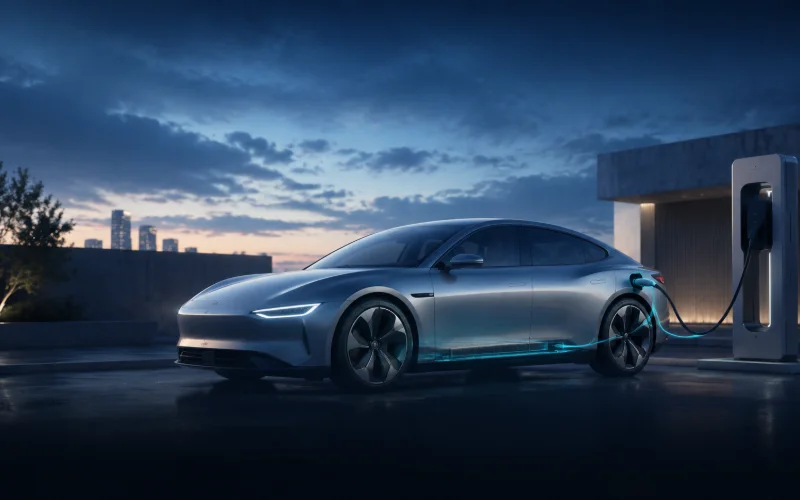
Automotive EV
High-efficiency power conversion that extends driving range and charging performance.
Overview
Battery voltages are moving from 400 V to 800 V and charging power to the megawatt class, which favours 1200 V SiC switching in every stage from the on-board charger to the charging station. DICIO serves e-mobility on two paths: 1200 V SiC MOSFETs in TO-247 and top-side-cooled JEDEC MO-354 packages for OBC, HV-LV DC-DC and charger power blocks, and SiC MOSFET and IGBT bare die for Tier 1 partners who build their own traction-inverter and e-axle modules. For charging infrastructure, DICIO 62 mm, BaseFRAME and SlimFRAME modules cover three-level active front ends and isolated DC-DC power blocks from 20 kW to megawatt charging.
Power conversion architecture
Power conversion from charging to traction
Power supplied from the grid passes through the charger into the battery, and the traction inverter converts the battery's DC power into the AC power the motor needs.
Grid
Utility power grid that supplies AC power to electric-vehicle chargers.
- System
- Charging infrastructure supply
- Power form
- AC input
Engineered value
Performance you can verify
Review the engineering values that matter when selecting a device, then connect each requirement to a product and its operating condition.
Key Applications
Traction Inverter (Die / Custom)
On-Board Charger (OBC)
HV-LV DC-DC Converter
DC Fast & Megawatt Charging
e-Bus & Commercial Vehicle
V2G / Bidirectional Charger
Key Topologies and Recommended Products
3-phase 2-level VSI (traction inverter)
- Stage / system
- 400 / 800 V battery e-axle, 100 ~ 400 kW
- Device class
- 750 / 1200 V SiC MOSFET die
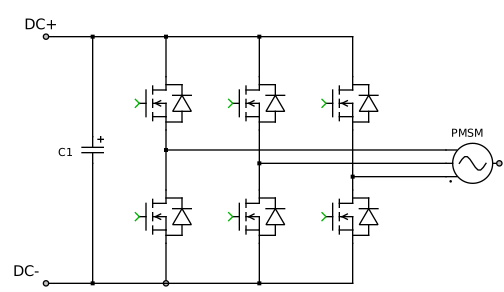
Recommended products 1
Looking for a module for this application?
Tell us your voltage, current and topology and our team will recommend a module or propose a custom design.